The Light of the World

Vignette Two
I am the light of the world: he that follows me shall not walk in darkness, but shall have the light of life. (John 8:12)
The Scene
The pinnacles of the great Temple of Jerusalem towered high above the temple mount, casting long shadows over the thirty-five-acre sacred grounds in the morning light. A bustling crowd from regions near and far filled the courtyard and buildings with activity during the festive holidays.
Columned porches within the eastern walls, raised above the courtyard pavement by several steps of white marble, served the people as make-shift amphitheaters to listen to clerics and scholars expound the Law of Moses. For the last three days, Jesus had spoken to the crowds and debated with the prominent religious teachers.
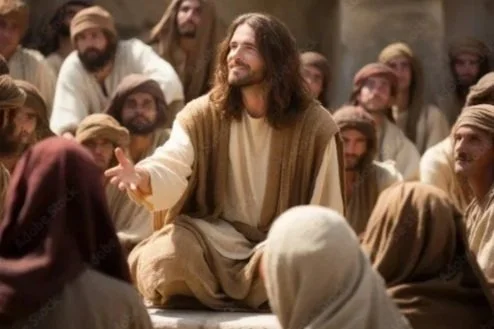
Only a day earlier, the last day of the Feast of Tabernacles, often called ‘The Great Day of the Feast’, his teaching fomented considerable resistance from the spiritual leaders. Nevertheless, on this sunny autumn morning He returned to the temple porches. He sat down and the people gathered around Him again to listen to His message. (John 8:2)
The Backstory
For months, Jesus had avoided Jerusalem because the religious leaders were so vehemently opposed to His messianic claims that they’d determined to kill Him. Delayed in His arrival to the festive holiday, Jesus had decided not to come to the Feast openly, so there was considerable speculation about Him and about His ministry. (John 7:10-27) Blending in with the crowd, Jesus must have overheard a conversation that questioned His academic pedigree.
That’s when He openly replied, “My message is not my own; it comes from God who sent me. Anyone who wants to do the will of God will know whether my teaching is from God or is merely my own. Those who speak for themselves want glory only for themselves, but a person who seeks to honor the one who sent him speaks truth, not lies.” Jesus was stating a clear difference between the religious leaders and Himself; that it wasn’t training with the most notable scholars that qualified Him, His message came directly from the Father.
The agitated reaction of the religious leaders was not because Jesus had healed the paralytic at the Pool of Bethesda so many months ago, but rather, that a noteworthy miracle had been performed on the Sabbath day. That irritation was still fresh with the festival crowd, for when Jesus declared, “Moses gave you the law, but none of you obeys it! In fact, you are trying to kill me,” trivial speculation gave way to irate confrontation.To prove His point, Jesus made the argument that they too worked on the Sabbath when, in obedience to the Law of Moses, they circumcised their children. “Why are you angry with Me?” Jesus asked them. “Because I made a man completely well on the Sabbath?” He was inferring that healing on the Sabbath was a work of God. Then He added,“Do not judge according to appearance, but judge with righteous judgment.”(John 7:23-24)
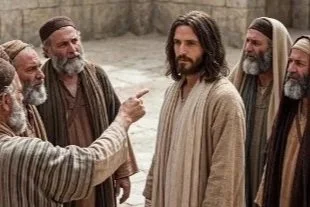
To say the Law of Moses was strict and punishments were severe is an oversimplification. Jesus was acknowledging that “righteous judgment” or the kind of judgment that God approves, is more concerned with intentions than appearances.
The prophet Micah had once taught their ancestors using a stark contrast. He said that God didn’t desire all their sacrifices. Rather, “He has shown you, O man, what is good; And what does the Lord require of you; but to do justly, to love mercy, and to walk humbly with your God?” (Micah 6:8) But to the religious leaders of Jesus’ day, all required sacrifices were performed perfectly, and any appearance of lawbreaking was judged without question. Their legalistic doctrine was one of outward obedience without any genuine understanding of mercy, and their self-righteous posturing by the Law put them in opposition to the “grace and truth that came by Jesus Christ.”(John 1:16,17)
The Drama
While the religious leaders murmured and threatened Jesus with arrest, there were still many people who believed in Him. “After all,” they said, “would you expect the Messiah to do more miraculous signs than this man has done?” (John 7:31) And, when many from the crowd heard this teaching, they said, “Surely this man is the Prophet we’ve been expecting.” While others replied, “He is the Messiah.” (John 7:40) When the Feast of Tabernacles came to its close, the division surrounding Jesus had only deepened—faith taking root in some hearts, bitterness hardening in others. But on the next day; the morning after the Great Day of the Feast, as Jesus sat teaching the crowds, the religious leaders had devised a trial that was sure to trap Jesus in His own words. All to be acted out before the crowd, his accusers would demonstrate something so sensational there would be no question that Jesus’ teachings were heresy. (read John 8)
Several teachers of the Law and men of the Pharisees approached with a mob; their bearing hard and malicious. One among them brandished such anger, his eyes raged with fire. He held the wrist of a woman with a brutal grip; dragging, and twisting her, and throwing her to the ground before the feet of Jesus. Stepping back with gritting teeth, he checked his rage and waited for the leader’s opening statement. “Teacher,” said the scribe with potent condescension, “This woman was caught in adultery. In the very act!” (v.4) One of the Pharisees then presented their argument, convinced that Jesus would incriminate Himself. “Now Moses, in the Law, commanded us that such should be stoned. But what do You say?” (v.5)

To argue with these men would be futile, to answer them quickly would feed their indignation. So, Jesus chose a more effective response: He “stooped down and wrote on the ground with His finger, as though He did not hear.” (v.6)
Of course they didn’t go away, and they continued to demand an answer, but the delay focused all the attention of the mob on what He was about to say. He raised Himself up and answered them, “He who is without sin among you, let him throw a stone at her first.” (v.7)
Stones dropped from their hands as one by one each man stood convicted by his conscience. The mob and all the accusers, from oldest to the youngest, all departed, leaving the woman sobbing on the ground. When Jesus asked her, “Where are your accusers? Has no one condemned you?” She timidly answered in bewilderment, “No one, Lord.” (v. 10) Her humility and genuine repentance were acknowledged when Jesus said to her, “Neither do I condemn you; go and sin no more.” (v.11)
The religious leaders had intended this scene, acted out before the crowd, to end with the downfall of a heretic. Instead, the drama unfolded as a shining example of God’s merciful kindness in the face of our sin. Jesus turned to the crowd to reexamine the meaning of the parable just played out before them. What lesson should be learned when sinful behavior is condemned by sinful men? The religious leaders had forgotten the words of Nehemiah, who had rebuilt the walls of Jerusalem centuries before, when he confessed, ”You are a God ready to pardon, gracious and merciful, slow to anger, and of great kindness.” Now, Jesus made it plain to all, declaring, “I am the light of the world. He who follows Me shall not walk in darkness, but have the light of life.”
The Message
While this may be the first time the festive crowds of Jerusalem heard Jesus declare, “I am the light of the world,” it had certainly been a common theme while He was teaching His disciples. The Apostle John makes reference to the testimony of John the Baptist in John 1:6-9, writing that John came to “bear witness of the Light.” He emphasizes that John was not that Light, but that“the True Light gives light to every man coming into the world.”This word-picture of Jesus being the True Light meant so much to the Apostle that in his writing to the churches he declares what Jesus repeated in His teachings. “This is the message which we have heard from Him and declare to you, that God is light and in Him is no darkness at all.”
From the very first chapter of the Bible, we read that God said, “‘Let there be light’; and there was light. And God saw the light, that it was good; and God divided the light from the darkness.” (Genesis 1:3-4) Light, both physical and spiritual, gives illumination, creates perception, and determines direction. Without light we are blind, ignorant and stumbling. The juxtaposition of the two words, light and darkness, implies that everything good is found in light, and everything evil remains in the darkness. God placed His light around mankind, and within mankind, when He said, “Let us make man in our image, after our likeness.” (Genesis 1:26) But the light within man went out when in disobedience to God’s will, man chose the darkness over the light.
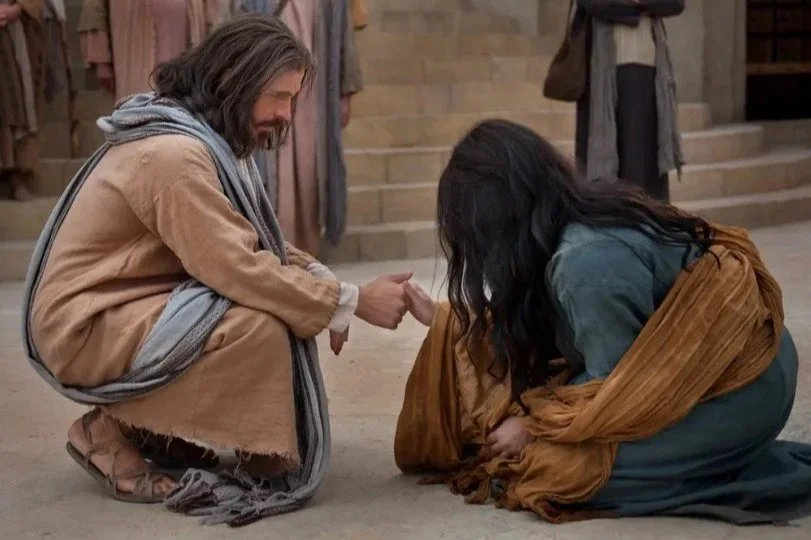
Jesus is the light that illuminates the soul! Just as Jesus words brought conviction to the conscience of the woman’s accusers, the Holy Spirit has been sent in His place to convict the world of sin.
How stubborn and unyielding people can be, justifying their attitudes and actions with adherence to a flimsy moral code! “If we say that we have no sin, we deceive ourselves, and the truth is not in us. If we confess our sins, He is faithful and just to forgive our sins and to cleanse us from all unrighteousness. If we say that we have not sinned, we make Him a liar, and His word is not in us.” (1 John 1:8-10) In truth, there is only one remedy for sin; the one sent as a propitiation for our sin, our savior Jesus Christ.
The Review
In consideration of the actors in this vignette, the manner in which Jesus framed his statement is very interesting. The scribes and Pharisees would often make reference to the written Law as the light of God, emphasizing that knowledge and wisdom were the true light. And that is why questioning Jesus’ academic credentials carried such weight. What we need to consider is; Jesus didn’t say that those who followed Him would have the “light of knowledge,” He said they would have the “light of life.” This one act play had demonstrated that knowledge in the hands of sinful men leads to death. But Jesus assured those who followed Him they would not walk in darkness. On the contrary, His light would lead them into eternal life. John the Apostle summed it up this way, “But if we walk in the light as He is in the light, we have fellowship with one another, and the blood of Jesus Christ His Son cleanses us from all sin.” (1 John 1:7)
Of all the “I am” statements Jesus made, only one is conferred upon the believer. In His famous Sermon on the Mount, Jesus taught that, ”You are the light of the world. A city that is set on a hill cannot be hidden. Men do not light a candle, and put it under a bushel, but on a candlestick; and it gives light to everyone in the house. Let your light shine before men so that they may see your good works, and glorify your Father in heaven.” (Matthew 5:14-16)

When writing to the Christians in Ephesus, the Apostle Paul instructed, “For ye were sometimes darkness, but now are ye light in the Lord: walk as children of light.” (Ephesians 5:8)
The Holy Spirit not only convicts the world of sin, but also leads the believer out of sin and into life. So again, Paul encouraged the Galatian believers, writing, “Walk in the Spirit, and ye shall not fulfil the lust of the flesh. if ye be led of the Spirit, ye are not under the law.” (Galatians 5:16, 18) With the Holy Spirit, you already have all you need to live a life of victory over sin and to be a shining example to the world of the Father’s love, mercy, and forgiveness. When you see the True Light, you will walk in the light, and your light will shine before the world!